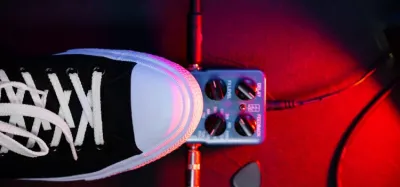
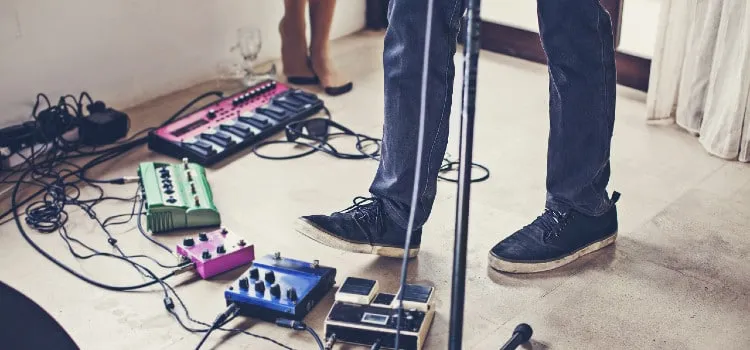
Playing a whole song solo means being your own band on stage. A looper lets you stack a bass line, a rhythm part, and a lead in real time, all triggered by your foot while your hands stay on the strings.
Don’t underestimate the footswitches. With one switch you double-tap to stop and triple-tap to clear, which is asking for a wreck mid-song.
That’s why dedicated stop, start, and undo switches keep your loops tight when the room is loud. The bigger choice is simple looper or full Loop Station.
A one-track box like the LEKATO layers a single backing part fast, while a multi-track unit like the BOSS RC-3 switches between verse and chorus on the fly. We rank these 8 picks, from ultra-mini stompboxes to road-proof rhythm workstations, on tracks, record time, footswitch layout, onboard drums, and stage reliability.
Quick Comparison Chart
| # | Product | Our Rating | ||
|---|---|---|---|---|
| 1 |  |
BOSS RC-3 Loop Station | ★★★★★ | Check Price |
| 2 |  |
TC Electronic Ditto X4 Looper | ★★★★★ | Check Price |
| 3 |  |
NUX Loop Core Deluxe | ★★★★☆ | Check Price |
| 4 |  |
Pigtronix SPL Infinity Looper | ★★★★☆ | Check Price |
| 5 |  |
Digitech JamMan Stereo Looper | ★★★★☆ | Check Price |
| 6 |  |
MXR Clone Looper M303 | ★★★★☆ | Check Price |
| 7 |  |
Rowin Twin Looper Station | ★★★★☆ | Check Price |
| 8 |  |
LEKATO Looper Pedal | ★★★★☆ | Check Price |
Loops Built for the Stage
Live looping punishes hesitation, which is why the Pigtronix Infinity’s latency-free engine and the Ditto X4’s two independent tracks matter more than raw recording time.
The NUX Loop Core stockpiles eight hours of recording and forty drum rhythms for set-building, while the JamMan adds SD expansion when onboard memory runs out.
1. BOSS RC-3 Loop Station
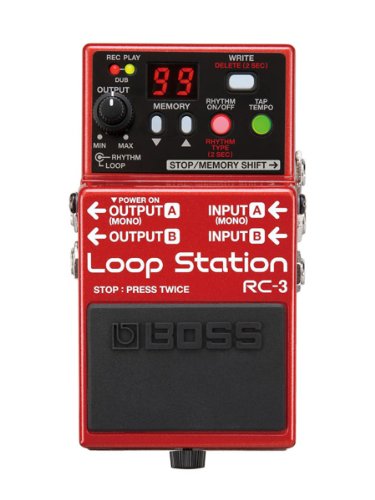
BOSS RC-3 Loop Station
Compact stereo Loop Station with 3 hours of recording, 99 memories, onboard drum rhythms, and auto-record for the stage.
Pros
- Up to 3 hours of stereo recording time
- Real drum patterns act as a rhythm guide
- Auto-record starts looping as you play
- Rugged BOSS metal housing for touring
Cons
- Single footswitch needs double-taps to control
- Small screen is hard to read in stage light
The BOSS RC-3 is the looper most working players name first, and for good reason. It stores up to 3 hours of stereo audio across 99 onboard memories, so you can save a different loop for every song in your set and recall it before you walk on stage.
The built-in rhythm guide with real drum sounds doubles as a metronome that an audience can actually groove to.
Auto-recording is the killer live feature here, kicking off the loop the instant you start playing so you never fumble a downbeat. The signature BOSS metal chassis shrugs off years of gigging, and a USB 2.0 port lets you move phrases to and from a computer.
The one catch is the single footswitch, which leans on double-taps for stop and hold for clear.
2. TC Electronic Ditto X4 Looper

TC Electronic Ditto X4 Looper
Dual-track looper with two dedicated footswitches, seven loop effects, and MIDI sync built for live phrase building.
Pros
- Two parallel loop tracks for layered parts
- Seven effects including reverse and half-speed
- MIDI sync locks loops to other gear
- Two large stop/start footswitches for hands-free use
Cons
- No onboard drum machine
- Larger footprint than a single-track looper
The Ditto X4 is essentially two Ditto loopers in one box, built specifically for guitarists who want to layer parts on stage. Two dedicated footswitches handle stop and start without any tap-dancing, and the two independent loop tracks let you build a verse on one and a chorus on the other for genuine song structure.
Seven onboard loop effects, including reverse, half-speed, and fade, give you room to get creative between sections, while MIDI sync locks your loops to a drum machine or other pedals. There’s no built-in drum track, so you’ll want an external rhythm source if you play to a click, but for pure live looping the X4 is one of the most stage-ready designs out there.
3. NUX Loop Core Deluxe

NUX Loop Core Deluxe
Deluxe looper with 8 hours of recording, unlimited layers, 40 drum rhythms, and an included dual footswitch.
Pros
- Up to 8 hours of 24-bit recording in 99 memories
- Unlimited overdub layers for big arrangements
- 40 drum rhythms across rock, pop, blues, and jazz
- Bundled NMP-2 footswitch for quick phrase switching
Cons
- No dedicated tempo BPM display
- Menu takes time to learn fully
The NUX Loop Core Deluxe is the value champion of this list, undercutting the big names while packing a huge feature set. It records up to 8 hours of 24-bit audio with unlimited overdub layers across 99 memories, which is far more capacity than any single gig demands.
That headroom means you can store entire setlists without ever managing storage.
For solo performers the 40 onboard drum rhythms are the standout, spanning rock, pop, blues, and jazz to keep your timing honest. The deluxe package also bundles the NMP-2 dual footswitch, which is the easiest way to jump between loop phrases hands-free.
It’s one of the most capable pedals to start with if you want room to grow.
4. Pigtronix SPL Infinity Looper
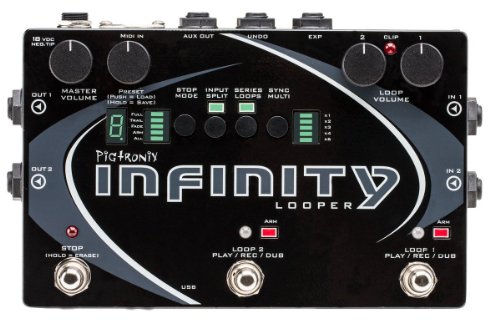
Pigtronix SPL Infinity Looper
Pro dual-stereo looper with loop sync multiplier, nine presets, latency-free recording, and analog clean-tone pass-through.
Pros
- Two synced stereo loops for verse and chorus parts
- Loop 2 multiplier sets x1 through x6 lengths
- Latency-free recording at 24-bit/48kHz
- Analog pass-through keeps your dry tone pristine
Cons
- Steeper learning curve than simpler loopers
- Premium price for hobby players
The Pigtronix Infinity Looper is a pro-grade tool for players who treat looping as a core part of their performance. It runs two stereo loops that can be synced, with a Loop 2 multiplier that sets the second loop to x1, x2, x3, x4, or x6 the length of the first, making complex polyrhythmic arrangements straightforward to build on stage.
Recording is latency-free at 24-bit/48kHz, and the analog pass-through keeps your dry guitar tone completely untouched when the loop is silent. Nine loop presets plus a blank canvas give you flexible starting points, and series or parallel modes change how the two loops interact.
It demands more setup than a plug-and-play looper, but the payoff is serious creative control.
5. Digitech JamMan Stereo Looper
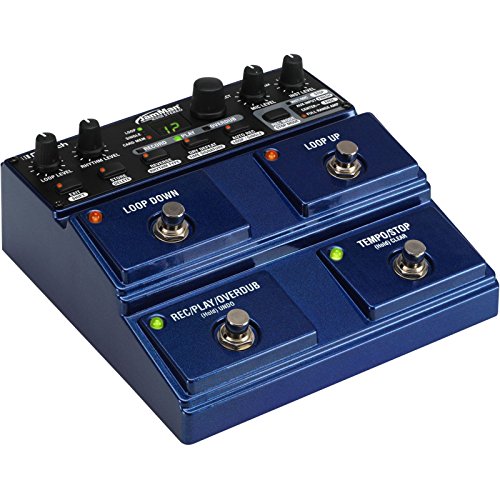
Digitech JamMan Stereo Looper
Stereo looper with 35 minutes of CD-quality recording, 99 memories, SD expansion, and four heavy-duty footswitches.
Pros
- Over 35 minutes of stereo CD-quality loops
- SDHC card adds 16+ hours and 99 more memories
- Four heavy-duty footswitches for live control
- JamManager software organizes and archives loops
Cons
- Footswitches can be noisy underfoot
- Takes up real estate on a pedalboard
The Digitech JamMan Stereo has been a live-looping workhorse for years and still earns its place on a gigging board. It captures over 35 minutes of CD-quality stereo loops across 99 internal memories, and an optional SDHC card balloons that to more than 16 hours and another 99 slots, so storage is effectively unlimited for a touring player.
The four heavy-duty metal footswitches are the real draw, giving you proper hands-free control over looping and loop selection without any tap-tempo gymnastics. The JamManager software lets you organize and archive loops on a computer over USB.
The switches can be a little clacky and the unit eats pedalboard space, but few loopers give you this much physical control.
6. MXR Clone Looper M303

MXR Clone Looper M303
Compact looper with 6 minutes of recording, unlimited dubs, half/double-speed and reverse, plus pristine 88.2kHz audio.
Pros
- Up to 6 minutes of looping with unlimited dubs
- Half-speed, double-speed, and reverse playback
- 88.2kHz storage handles high-gain distortion cleanly
- Small enclosure fits a crowded pedalboard
Cons
- No internal memory banks to save loops
- Single loop track only
The MXR Clone Looper proves you don’t need a big box to get pristine sound. It records up to 6 minutes of loops with unlimited dubs, and its 88.2kHz storage rate handles even high-gain distortion without smearing, which matters if you loop a heavy rhythm part under a solo.
Half-speed, double-speed, and reverse playback are all on tap for stage theatrics.
Two clearly defined footswitches make operation intuitive in the heat of a set, and an expression jack lets you ride loop output level with a volume pedal. The main trade-off is the lack of internal memory banks, so this is built for live layering in the moment rather than recalling saved songs.
For a compact, great-sounding board addition, it’s hard to beat.
7. Rowin Twin Looper Station

Rowin Twin Looper Station
Affordable dual-footswitch looper with 10 minutes of recording, overdub, forward and reverse play, and USB transfer.
Pros
- Two footswitches for fast hands-free control
- Up to 10 minutes of recording with overdub
- Forward and reverse playback for effects
- USB import and export of your loops
Cons
- Recording disables during reverse play
- Lightweight build feels less road-ready
The Rowin Twin Looper is the budget pick that still gives you two footswitches, which sets it apart from most cheap loopers. One switch governs standard loop functions while the other reshapes the loop, so clearing, stopping, and tweaking the tempo stay under your feet.
You get up to 10 minutes of recording time with overdub, plenty for live layering.
Independent left and right channel volume controls and both forward and reverse playback add flexibility for an inexpensive unit, and USB transfer lets you import and export loops. Recording is disabled during reverse play, and the lightweight build feels less road-tough than the premium options, but for the money this is a lot of looping capability.
8. LEKATO Looper Pedal

LEKATO Looper Pedal
Ultra-mini single-footswitch looper with 5 minutes of recording, unlimited overdubs, and 24-bit uncompressed audio.
Pros
- 5 minutes of clear looping with unlimited overdubs
- Aluminum alloy build in a tiny footprint
- Analog-Dry-Through keeps your dry tone pure
- USB import and export of WAV loop files
Cons
- Single footswitch limits live control
- No onboard memory or drum tracks
The LEKATO is the ultra-mini option for players who want looping without surrendering pedalboard space. Despite its tiny aluminum-alloy enclosure, it delivers 5 minutes of clear looping with unlimited overdubs in 24-bit uncompressed audio, and its Analog-Dry-Through design keeps your dry signal in pure analog form.
Record, undo, redo, stop, and erase are all mapped to foot commands.
A single-knob interface sets loop playback volume, and USB lets you upload and download WAV loop files to a computer. The single footswitch limits how much you can do mid-song compared with multi-switch loopers, and there are no onboard memories or drum tracks.
As the most affordable and compact entry here, though, it’s a smart way to add a simple backing loop to any rig.
Video Reviews
More demos worth a watch:
Final Thoughts
The BOSS RC-3 Loop Station took the top spot because it nails what live looping actually demands: deep memory for full setlists, real drum rhythms to hold your tempo, auto-record so you never miss the downbeat, and a chassis tough enough to survive years on the road. For most working guitarists, it’s the looper that simply gets out of the way and lets you perform.
If your act is built around stacking parts in real time, the TC Electronic Ditto X4 is the better tool. Its two dedicated footswitches and two independent loop tracks make switching between verse and chorus sections genuinely playable on stage, something a single-track looper can never quite match.
And on a budget, the NUX Loop Core Deluxe hands you 8 hours of recording, 40 drum rhythms, and a bundled footswitch for a fraction of a flagship price.
Whichever way you lean, match the footswitch layout to how you actually play live. A pedal with dedicated stop, start, and undo switches keeps your hands on the guitar and your loops tight, and that reliability is worth more on a loud stage than any single spec on the box.
Happy looping.