You’ve spotted a strap you like, and now you’re checking whether it’ll fit the guitar you own. Relax, because this is one of the easier calls in guitar gear.
Here’s the short of it. Acoustics, electrics, and basses all hang from the same kind of buttons, so almost any strap will attach to almost any guitar.
This article explains why that’s true and what actually changes from strap to strap. We’ll cover the choices that affect comfort and how to keep the strap from slipping off.
First, let’s be clear on what a guitar strap really is.
What Is a Guitar Strap?
A guitar strap is a length of fabric or leather worn over the shoulder to support the guitar while you play standing up. It attaches to the small button-like connectors (strap buttons) on the guitar body, holding the instrument at a consistent height so your hands are free to play.
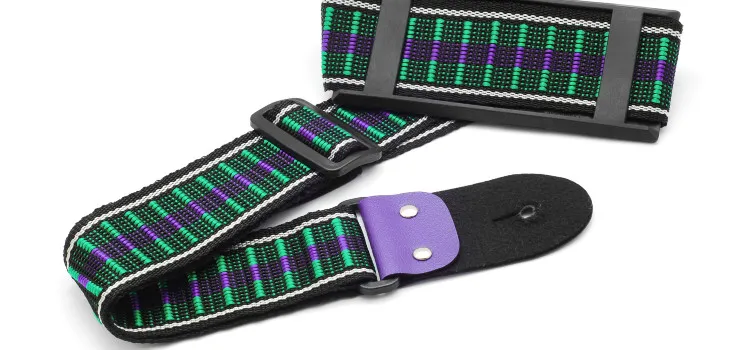
Straps come in many widths, lengths, colors, and styles, and some add extras like an underside cushion for comfort. When buying one, the things that actually matter are length, width, material, and whether you use a locking mechanism.
Prices typically range from about $30 to $70, though premium straps can run over $100. A long-time favorite pick, and one of the most comfortable straps out there, is this padded Levy’s strap on Amazon.
I’d also recommend using strap locks like these ones so the strap can’t slip off the button mid-song.
Is There a Difference Between Acoustic and Electric Guitar Straps?
Functionally, no. There’s no meaningful difference between an acoustic strap and an electric strap.
They all fit all guitars because they all connect to the same standard strap buttons.
The strap itself doesn’t care what kind of guitar it’s holding.
The differences you’ll see are about design, not compatibility. Electric guitars are often associated with edgier, harder-edged music, so you’ll find more straps with bolts, skulls, and other bold graphics marketed toward that crowd.
Acoustic players, associated with mellower, lighter music, tend to see more understated patterns and jacquard designs. Those are just marketing generalizations.
What actually matters before you buy is comfort: look at the strap’s width, material, and how far the length adjusts.
Do Guitar Straps Work on Bass?
Yes. Guitar straps work on bass because the attachments are universal, so any strap will physically connect.
To get a strap that works well on bass, keep three things in mind.
- Strap length - A bass is usually played a bit lower than a regular guitar. If you already have a strap on the bass, measure it at the length you like, since most guitar straps are adjustable. Make sure the strap you’re considering covers that range.
- Strap width - Basses tend to be heavier than regular guitars. Wider straps spread the weight over more surface area, so they’re less likely to dig into your shoulder. Aim for a strap at least 2.5 inches wide, up to around 4.5 inches, for a bass.
- Stretch and material - For a heavy instrument, look for a sturdy, well-made leather strap. Chromium-tanned leather can stretch under load less than you might fear. For a heavy instrument like a Taylor acoustic electric guitar or one of these electric guitars, consider adding a shoulder pad such as a neoprene pad, which is comfortable and durable.
How to Choose a Guitar Strap
Since fit is never the issue, choosing a strap comes down to a handful of practical factors.
Material
Material affects comfort, durability, and looks. Here are the common options.
- Leather - Prized for its appearance, durability, and comfort. Leather comes in many colors and styles and can be customized with monograms.
- Suede - Popular for its look and price. Suede grips well and handles moisture, making it a good pick if your hands or shoulders sweat. It’s comfortable and durable.
- Polyester (nylon/cotton blends) - Easy to dye and print on, so it offers the widest range of designs, usually at the lowest price.
Design and Color
Color and graphics have no effect on performance, so pick something that matches your style. Straps with skulls and studs suit rock and metal players, while simpler designs fit acoustic and folk settings.
It’s purely personal preference.
Length
Most guitar straps adjust over a wide range, but extra-short and extra-long options exist for outliers. Taller players often prefer longer straps, which also makes the guitar easy to grab when you’re hanging guitars on the wall.
Shorter players should choose a strap that adjusts down far enough to sit comfortably.
Width
Width dictates how much support your shoulder gets. Wider straps distribute weight more evenly, reducing strain and improving stability and comfort.
For heavy instruments, a wider strap is the better choice, though a narrower strap with a shoulder pad also works.
Price
For beginners, a strap under $30 is plenty. Most straps in that range are nylon or cotton with leather ends, and they’re comfortable, secure, durable, and look good.
Straps around $100 tend to be more comfortable and are worth it for heavy instruments you play for long stretches.
Frequently Asked Questions
Do all guitar straps fit all guitars?
Yes. Because acoustic, electric, and bass guitars all use the same standard strap buttons, any standard guitar strap will fit any of them.
The only thing to check is that the strap adjusts to a length and width that suits you and your instrument.
Do I need strap locks?
You don’t strictly need them, but they’re cheap insurance. A standard strap end can slip off the button if it gets bumped, and strap locks lock it in place so your guitar can’t drop.
They’re especially worth it for heavier instruments and for playing while standing or moving.
What if my acoustic only has one strap button?
Many acoustics have a button only at the base. In that case, the strap’s other end ties around the headstock behind the nut with a lace or string, which most acoustic-style straps include.
You can also have a luthier add a second strap button at the heel if you prefer a button-to-button setup.
How wide should a guitar strap be?
For a standard electric or acoustic, a strap around 2 to 2.5 inches wide is comfortable for most players. For a heavier bass or a long playing session, go wider, up to about 4.5 inches, or add a padded shoulder section to spread the weight.
Final Thoughts
Guitar straps are essential accessories, and the good news is that compatibility is never the problem. Every standard strap fits every standard guitar and bass, acoustic or electric, because they all attach the same way.
That frees you to focus on what actually matters: length, width, material, design, and price. Match those to your body and your instrument, add strap locks if you want extra peace of mind, and you’ll have a strap that’s comfortable and secure for years.
Straps span a wide range of budgets, from about $30 to $100 or more, so there’s a good fit for every player and every guitar.